
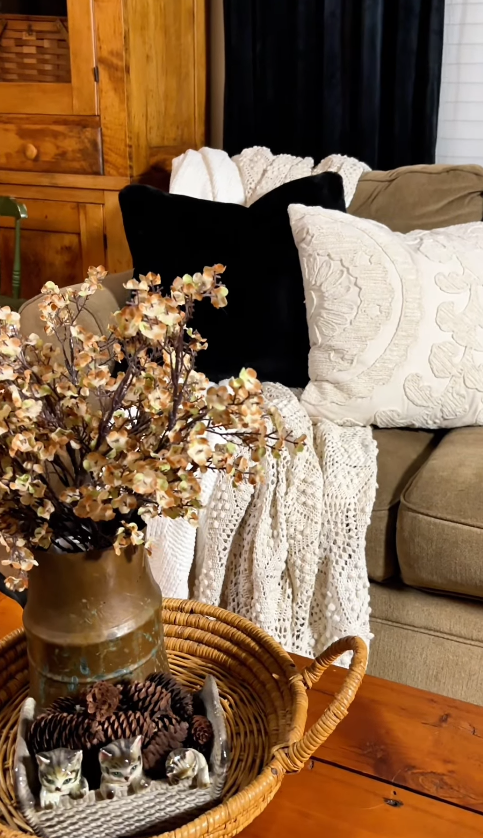
How to Design a Magazine-Worthy Room
A clear, calm way to bring a space together
My first home was a new construction house. Builder grade and plain. Back then, Pinterest didn’t exist yet, so my inspiration came from magazines and catalogs. Ethan Allen commercials and catalogs, to be exact.
I loved their farmhouse and French country look. As soon as I had what felt like adult money, I bought a bedframe, a coffee table, and a couple of end tables. They were rustic but refined and I was proud of them. Add in an overstuffed green and white L-shaped sofa, and I was officially decorating.
And I’ll be honest. I had no idea what I was doing.
What I wanted was a rulebook. Some kind of guidance that showed me how a room actually comes together. Even with early decorating shows, it felt like there was a system happening behind the scenes, something meant for designers, not regular people trying to make a home feel right.
But there is a system. And the system can be learned.
This is the framework I wish I had back then. It’s not about copying a look or starting over every time something feels off. It’s about planning a room the same way magazine-worthy spaces are planned. Thoughtfully. On purpose. In the right order.
Below are the steps, and be sure to watch the videos as I share more about each of them!
Step One: Decide the Direction
Before moving furniture or buying anything, you should decide what the room is meant to be. Take time to define:
- the mood you want the room to have
- the style direction you are drawn to
- a simple color and texture palette
- how the room is actually used right now
This step becomes the filter for every decision that follows. When a room feels scattered, it is usually because this part was skipped.
Step Two: Set the Constraints
This is where the room gets realistic in the best way. Be clear about:
- how the room needs to function
- how people move through the space
- the scale of the room and furnishings
- what needs to stay and what can change
- your comfort level with spending
These aren’t limitations. They are guardrails. Once they are clear, decisions feel steadier and less emotional.
Step Three: Choose Anchors and Inspiration
This is where the room starts to feel intentional.
Anchor pieces are the larger items that establish layout and scale. Most rooms need one main anchor and sometimes a second.
Inspiration pieces guide the feel of the room. These might be artwork, textiles, a vintage find, or something you already love.
By the end of this step, you should know:
- which pieces the room is built around
- what is influencing the mood and style
- what supports those choices and what does not
Decorating flows more easily after you make these decisions.
Step Four: Layer the Plan
This is where planning turns into a clear roadmap.
First, the foundational planning layers. Before adding decor, define these three layers:
- Color palette
- The main colors that will repeat throughout the room
- Texture palette
- Woods, metals, fabrics, finishes, and materials
- Space composition
- This step focuses on arranging furniture and objects for balance, flow, and scale.
These layers hold the room together visually and prevent random choices later.
Then, the 8 layers of decor
Once the foundation is clear, you can build the room using these decorating layers:
- Artwork and mirrors
- Trays and books
- Baskets and bins
- Lamps and lighting
- Linens and pillows
- Vases and vessels
- Greenery and florals
- Decorative accents
You do not need to add everything at once. These layers are added slowly and intentionally.
Step Five: Follow the Redecorating Order
This is the part most people never learn, and it makes a big difference.
A room comes together best when you work in this order:
- clear the room of what no longer fits the plan
- address any fixes or foundational changes
- focus on walls and floors
- place anchor pieces to establish scale and flow
- define the color palette, texture palette, and space composition
- build the room using the 8 layers of decor
- edit and refine as you go
Working in this sequence keeps rooms from feeling chaotic or unfinished.
A Final Thought
Above all, whether you are decorating your first home or finally trying to understand why some rooms come together so easily, I hope this framework helps.
Certainly you can always go deeper and learn more, but this gives you the missing structure. It shows you how to approach decorating the way people do when their homes feel polished, settled, and thoughtfully put together.
And finally, just as important, your home should still be livable. Beautiful spaces are meant to be used and enjoyed. When a room supports your real life and still feels intentional, that is when it truly works.
Besides reading about designing and vintage, and having a “plucky purpose“, you can also find me on Facebook, Instagram, Pinterest, YouTube and TikTok.